Regent · 1031 exchange software

Every exchange, every deadline,every dollar accounted for.

Regent is the system of record for a qualified intermediary. Your team opens the file, the exchanger signs and identifies from a phone, both deadlines run on their own, and no payout leaves without verified instructions and the approvals your firm requires.
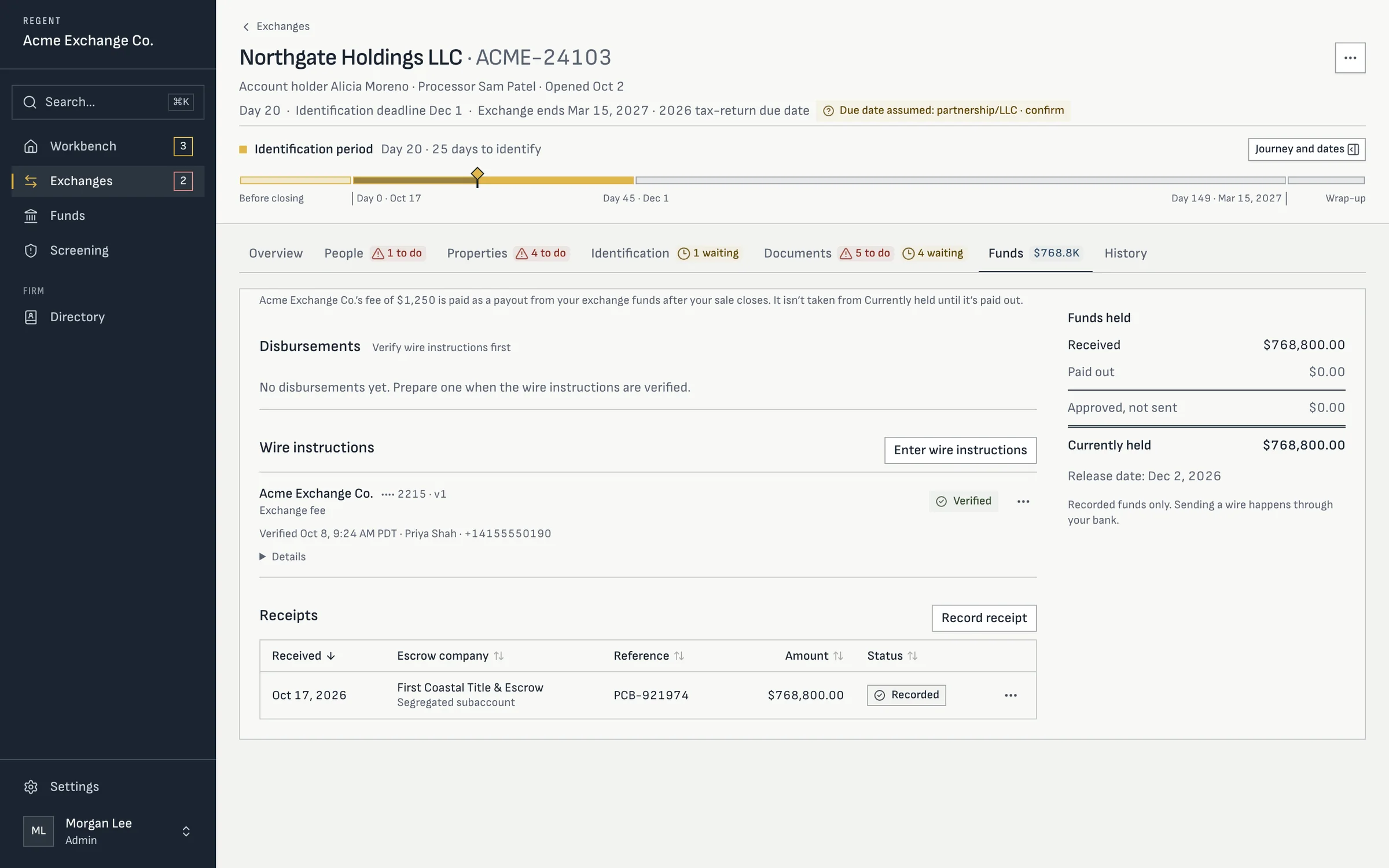
A Regent exchange file: the identification period timeline from day 0 to day 45 and the exchange deadline, verified wire instructions, receipts and funds held
One exchange file: where it stands against both deadlines, the money held, and wire instructions verified by callback before any payout.

Screens from Regent today, with a sample firm and sample exchanges. Your workspace and portal carry your firm’s name and logo.

45

Days to identify

Counted from the transfer on every file, with reminders to the exchanger and the file's processor on a schedule your firm sets.

180

Days to close

Or the tax-return due date, if it comes first. Regent assumes the earlier date until your staff confirm otherwise.

2–5

Approvals on every payout

Your firm sets the number. The person who prepared the payment can't count as an approver unless you allow it.

Why firms switch

Built for the coordinator with ten files open.

Most exchange shops run on a spreadsheet of dates, a folder of Word templates, calendar reminders and a bank portal. Each one is fine on its own. Together they leave the questions that matter, like “where is this exchange and where is the money,” to whoever remembers.

Regent puts the whole file in one place and keeps it moving. Steps complete themselves as the information arrives. What a processor chooses to collect later becomes a follow-up instead of a blocker. Anything that needs a person lands on the workbench, and anything that could cost the exchanger their deferral stops the file until someone with authority looks at it.

  • A workbench of what needs you today, deadlines inside 14 days, and funds held
  • Search across files, people, properties, documents and escrow companies with ⌘K
  • Every change recorded with who made it and when, in a log nobody can edit
  • Your logo, colors and letterhead on the portal and on every email

How a file runs

Five phases. The file moves when the facts arrive.

Each delayed exchange follows a versioned flow. A step completes when its data or document arrives, and the file advances on its own. A processor can force a step or a phase, but only with a written reason, and the history shows which moves were automatic and which were forced.

When a file goes wrong, Regent says so. A missed day 45 or a lapsed exchange period is flagged for staff to confirm, and the funds release follows the regulation’s timing.

  1. 1

    Open

    Invite the exchanger, collect intake and identity, send the opening package, notice the buyer and give escrow the closing instructions and wire letter.

  2. 2

    Funds received

    Record the closing and the receipt. Both clocks start, the deadline letter goes out and the return due date is set.

  3. 3

    Identification period

    The exchanger lists replacement property and signs the notice. Your staff review it before day 45.

  4. 4

    Exchange period

    Replacement contract, assignment, escrow instructions, earnest money and the closing disbursement.

  5. 5

    Closing out

    Residual funds, the final accounting and the tax package for the exchanger's Form 8824.
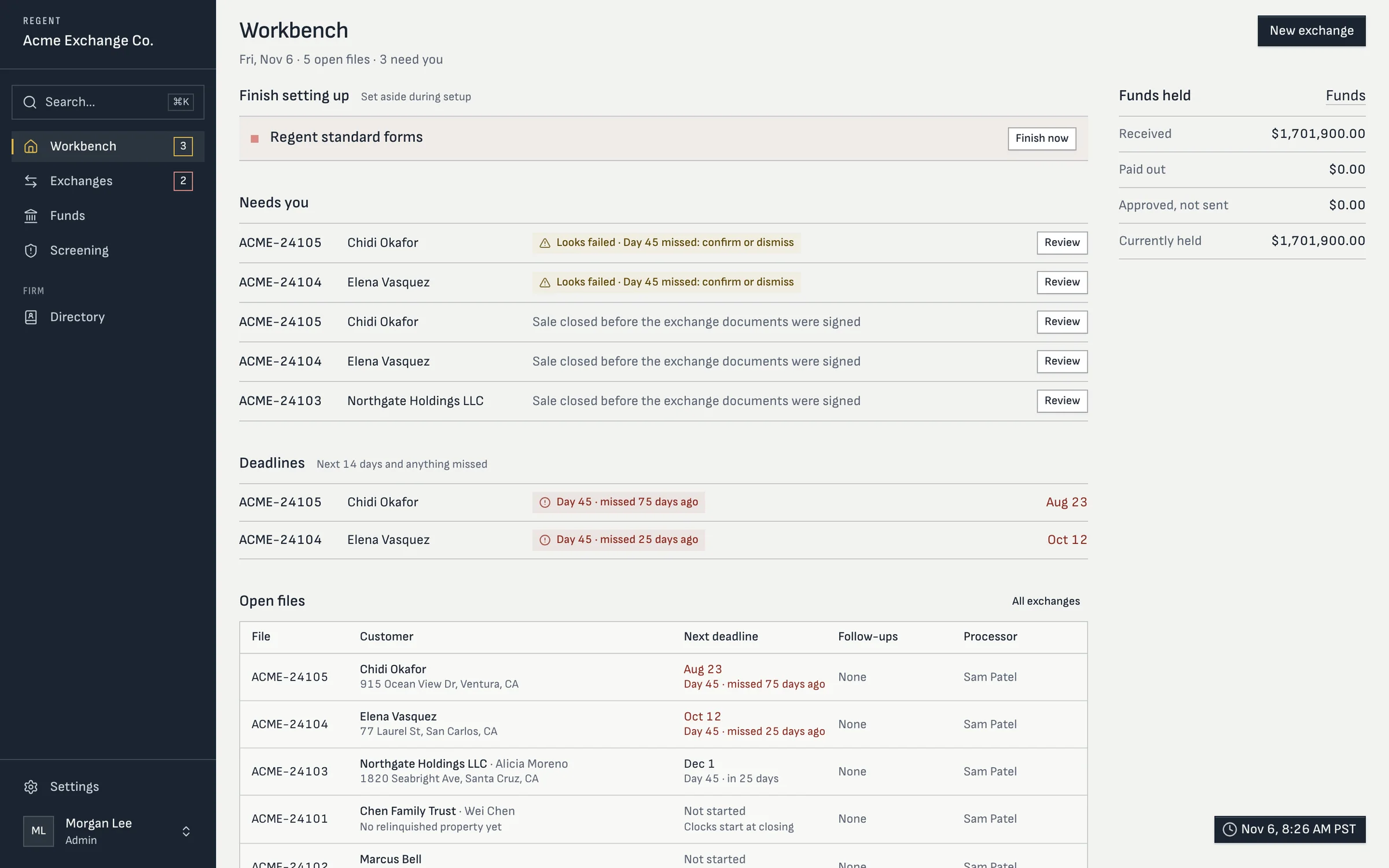
Regent workbench listing the files that need a person, deadlines in the next 14 days, open files and funds held
The workbench: what needs a person today, including files that look failed for staff to confirm or dismiss.

Exchange funds

No payout without verified instructions and your approvals.

Wire fraud is the risk every intermediary lies awake over. Regent holds every disbursement to the controls your firm sets, and it stops the ones that look wrong until someone with authority signs off.
  • Wire instructions verified by callback to a number from your escrow directory, never one the requester supplied
  • Two to five required approvals, set by your firm; loosening the policy needs a second person
  • 16 hard stops, including a payee mismatch, a non-US bank and instructions changed within 24 hours of the wire
  • The exchanger approves each payout: from their phone with a one-time code, by e-signature, or on paper checked by a second person
  • A release date that can't undercut the regulation's limits on the exchanger's access to funds
How the funds ledger works
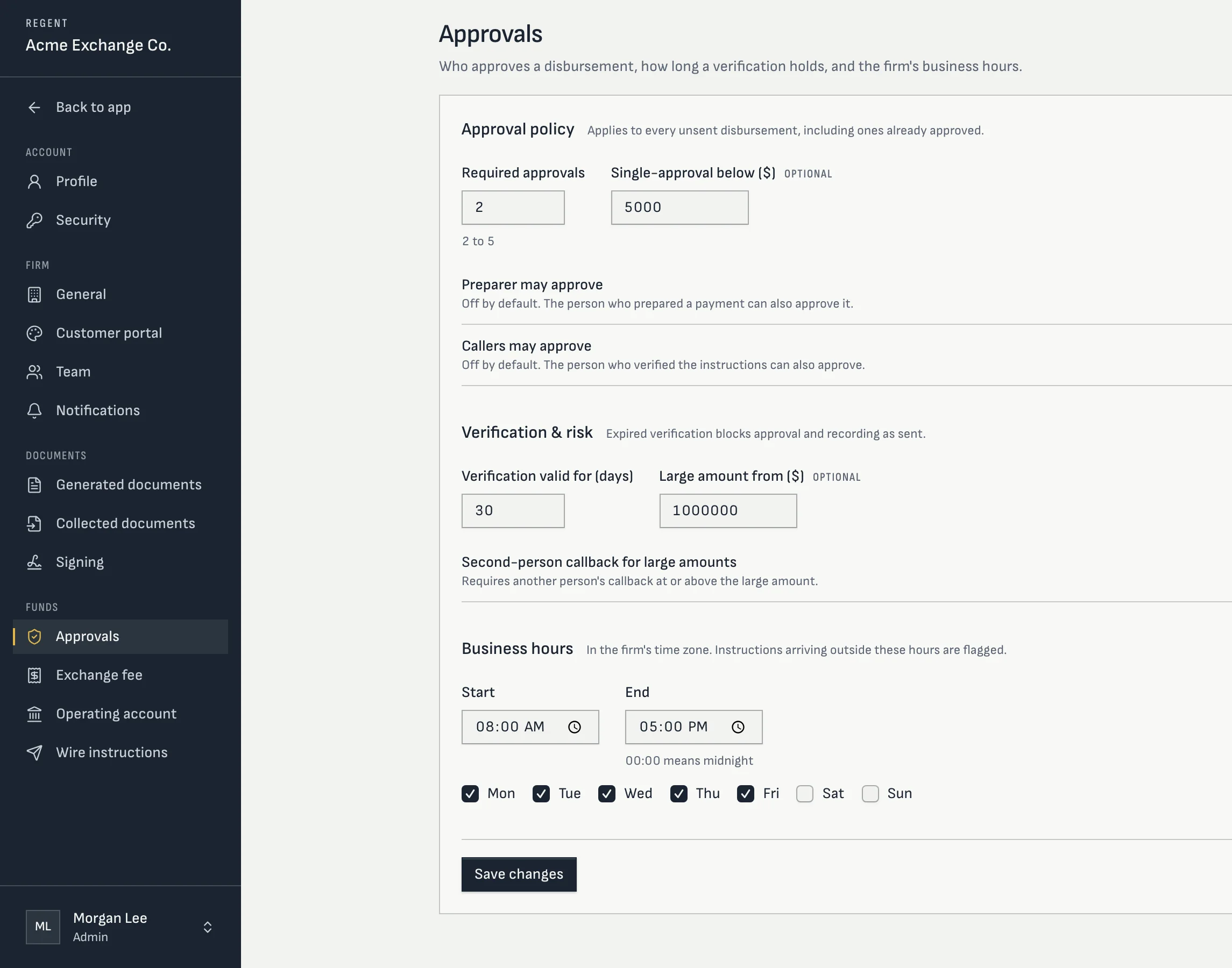
Regent approval settings: required approvals, single-approval limit, verification validity, second-person callback for large amounts and business hours
Approval policy: how many people approve, how long a verification holds, and when a large amount needs a second callback.

The exchanger’s side

A portal a first-time exchanger understands.

Many of your clients will do one exchange in their life. The portal tells them what to do, by when, in plain words, and it works on a phone. They complete intake, verify their identity, sign, identify replacement property and approve payouts. They see what your firm holds for them and when each deadline falls.

Tour the exchanger portal
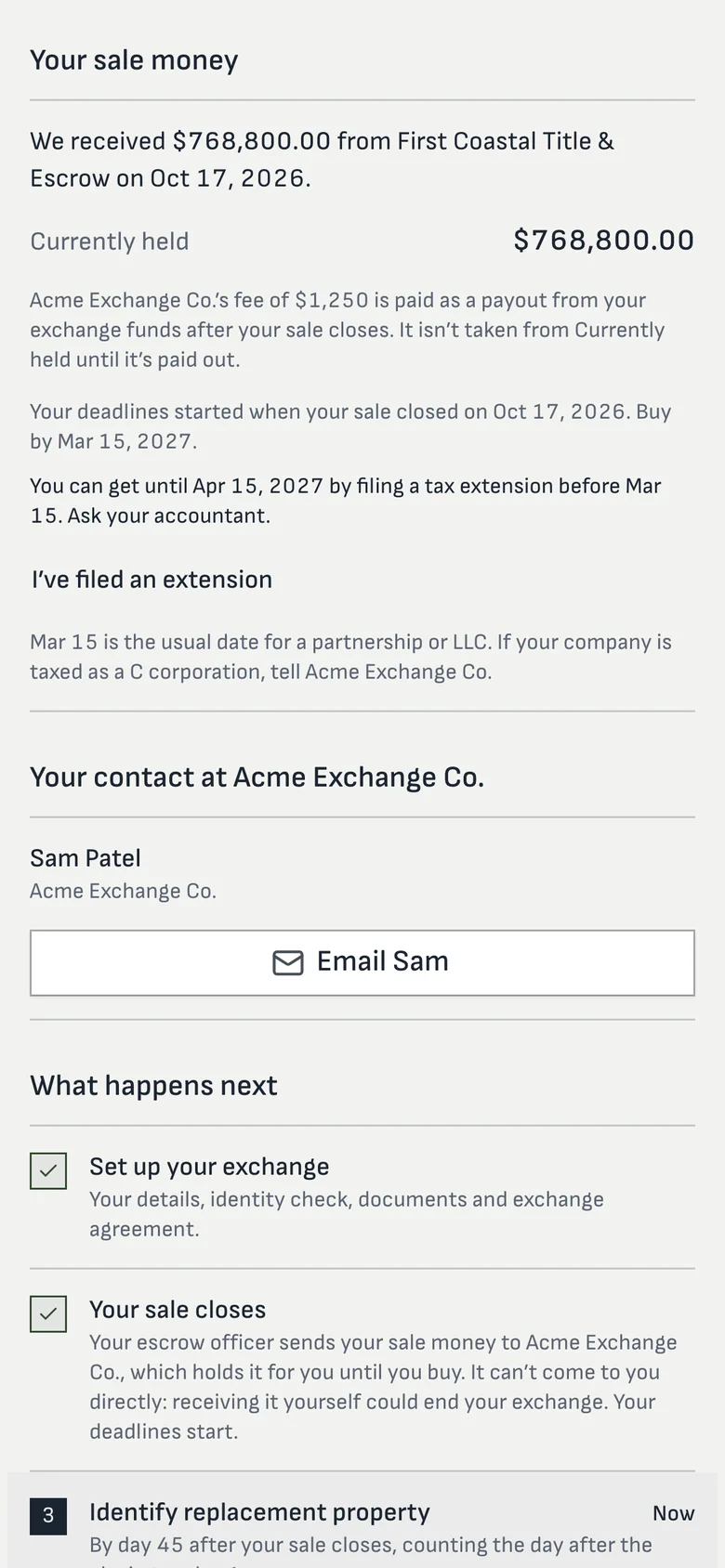
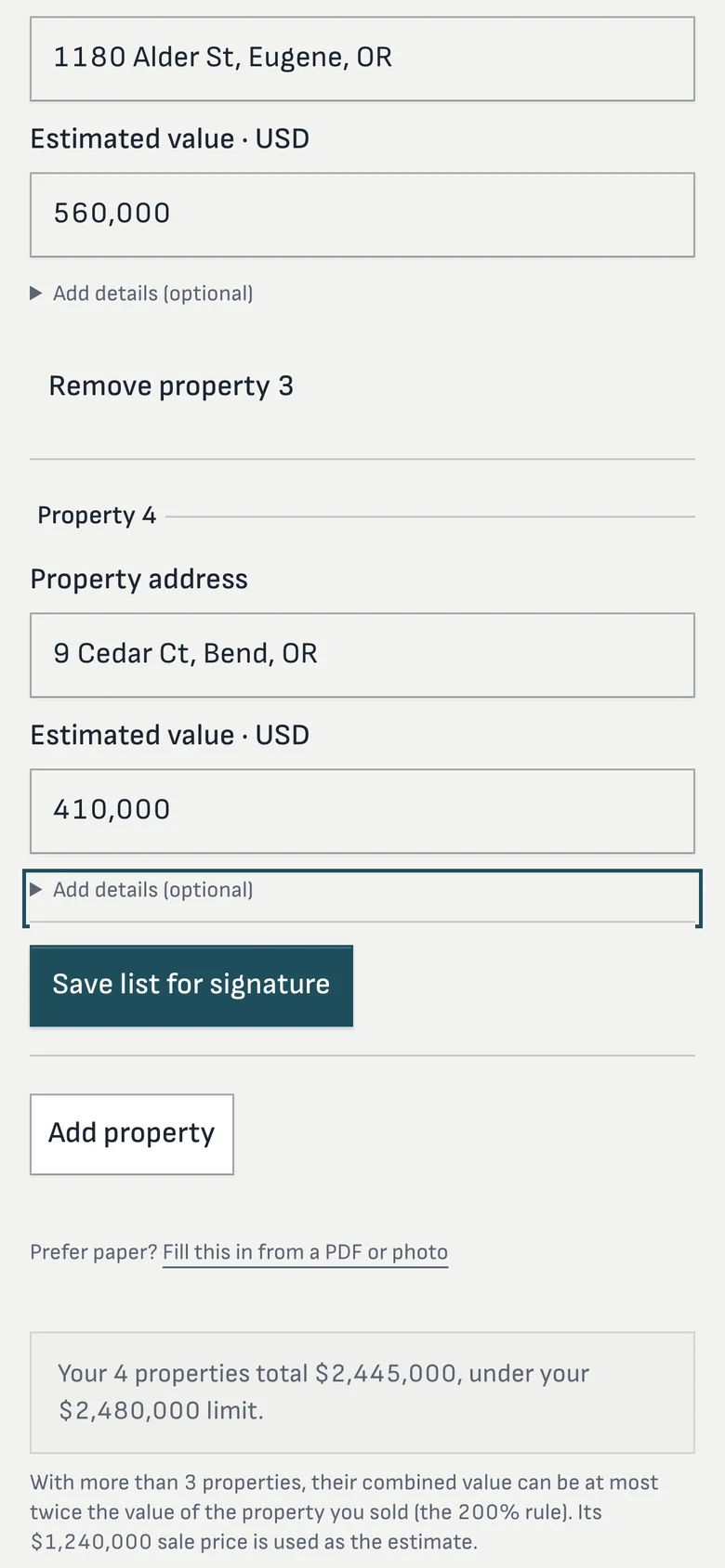
Exchanger portal on a phone: sale money received and held, the deadlines explained, and what happens next
Funds held and the deadlines, explained.

Who uses Regent

For firms that hold other people's exchange money.

Qualified intermediaries

Independent exchange companies replacing spreadsheets and dated software. Regent is software only: it never competes with you for exchangers. For qualified intermediaries

Title, escrow, banks and attorneys

Firms adding a 1031 exchange business beside the one they run, with controls in place on the first file. For title, banks and attorneys

Straight answers

Questions intermediaries ask

What kinds of exchanges does Regent run?
Delayed (forward) 1031 exchanges: the relinquished property sells first, your firm holds the proceeds, and the exchanger identifies and buys replacement property within the 45-day and 180-day periods. The exchanger can be an individual, a trust or an entity, with as many signers as the entity needs.
Does Regent send wires?
No. Regent decides whether a payout may go, and records who verified, approved and sent it. Your staff send the wire through your bank, then record it as sent. The ledger is your record of the money; the bank remains the bank.
Can we use our own exchange agreement?
Yes. Your firm uploads its own exchange agreement and escrow agreement as Word templates. Regent installs its standard forms for the rest of the file, such as assignments, notices, the identification notice and the final accounting, and you can edit any of them.
How long does it take to start?
A guided setup walks an admin through the firm, the team, money settings, documents and the customer portal. A firm with its agreements ready can open its first file the same day.
Who can see an exchanger's information?
Your firm's staff, by role. Every firm's data is kept apart by a guard that refuses any query not tied to one firm, and taxpayer IDs and account numbers are encrypted.
Is this tax or legal advice?
No. Regent applies the timing and identification rules your firm already follows and shows its work. Your firm and the exchanger's advisors make the calls.

See a file run from intake to the final accounting.

On a call we walk an exchange through Regent with your questions in mind, and you leave knowing what it would take to move your files.

Your team has a direct line to ours.